Most people file creatine under “strength supplement.” That is accurate, it is the most-researched compound in sports nutrition for power output and training capacity. But the same molecule that helps your muscles regenerate energy also shows up somewhere most people do not think to look: your brain.
And the conditions where that matters most are the ones operators, first responders, and shift workers live in, not enough sleep, sustained stress, and a job that does not care how rested you are.
This is not a claim that creatine makes you smarter. It is a straight look at what the research actually examines about creatine, brain energy, and cognitive performance when you are running depleted.
Creatine is not only a muscle compound
Creatine’s job in the body is energy logistics. It helps regenerate ATP, the molecule your cells spend to do work, through the phosphocreatine system. In muscle, that is what supports short, high-intensity effort.
Here is the part that gets less attention: that same phosphocreatine system exists in your brain. The brain is one of the most energy-hungry organs you have, burning a disproportionate share of your daily energy just to run baseline cognition. Creatine is part of how neural tissue buffers and regenerates that energy.
So when researchers started asking whether a compound that supports muscle energy might also support brain energy, it was not a marketing stretch. It was following the biochemistry.
The brain runs on energy, and stress drains it
Your cognitive performance is not a fixed number. It drops when the system is taxed: sleep deprivation, prolonged mental load, physical exhaustion, high-stress decision-making. Anyone who has worked a 24-hour shift, stood a long watch, or pushed through back-to-back calls knows the feeling, the lights are on but the processing is slow.
That degradation is partly a brain-energy problem. And that is exactly the window researchers have focused on when studying creatine and cognition.
What the research actually examines
A growing body of research has looked at creatine supplementation and cognitive performance, and a consistent theme has emerged: the measurable effects tend to show up most clearly when the brain is under stress, not when it is well-rested.
Studies have examined creatine in contexts like sleep deprivation and demanding mental tasks, the conditions where brain energy is most strained. The pattern researchers describe is that creatine appears more relevant as a buffer when your system is depleted than as a boost when you are fresh and fully recovered.
A few honest caveats, because this brand does not overstate:
- This is an active and still-developing area of research, not settled fact.
- Effects reported in studies are modest, and individual response varies.
- Creatine is not a stimulant, a nootropic “smart drug,” or a substitute for actual sleep. Nothing replaces sleep.
What the research supports is narrow and specific: creatine is an energy substrate, and the brain uses energy, so its cognitive relevance is most plausible exactly when your energy systems are stressed.
Who this actually matters for
If you train hard and sleep eight hours in a quiet house, the cognitive angle is a footnote, take creatine for the strength benefits and move on.
But a lot of people do not operate under those conditions by choice:
- Military and tactical professionals running sustained operations on broken sleep
- First responders, police, fire, EMS, working rotating shifts and long calls
- Shift workers whose schedules fight their circadian rhythm
- Athletes stacking training stress on top of life stress
These are people whose cognitive baseline is regularly degraded by the demands of the job. That is the population for whom the research on creatine and stressed cognition is most worth understanding.
How it fits, same protocol, no gimmicks
There is nothing special you do to “use creatine for cognition.” It works the same way it works for everything else: through saturation.
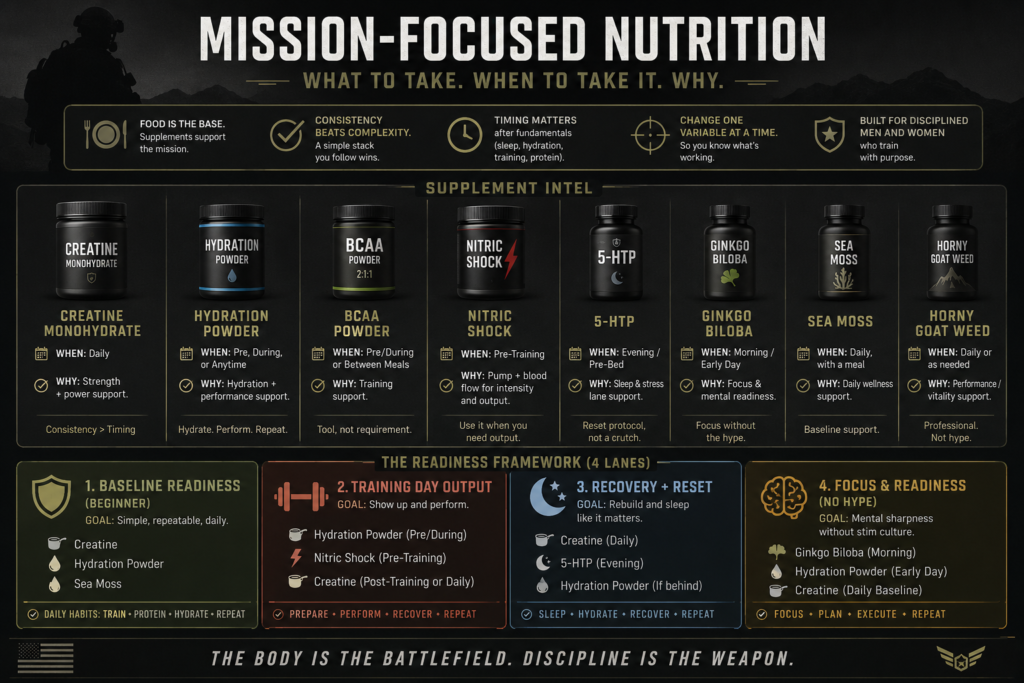
5 grams of creatine monohydrate daily. Consistent use. No loading phase required. You are not taking it like a pre-test stimulant an hour before you need to think, you are maintaining a full tank so the energy buffer is there when the day goes sideways. Boring on purpose. Consistency is the entire mechanism.
The standard that matters when you take it daily
One last point, and then the disclaimer. If you are putting something in your body every single day, for your training and, potentially, for cognitive resilience under load, purity stops being optional.
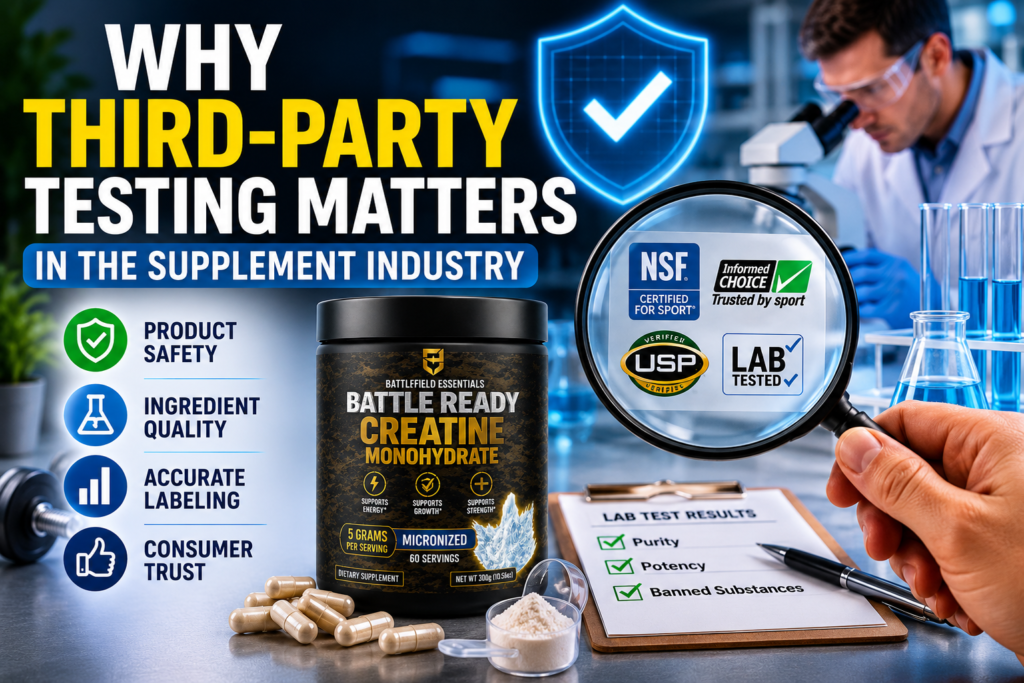
That is why Battle Ready Creatine Monohydrate is a single ingredient, micronized, and third-party tested by an independent lab, with the Certificate of Analysis published. You can read exactly what is in it before you decide. No proprietary blends, no fillers, no guessing.
Bottom line
Creatine is not a smart drug, and anyone selling it that way is overstating it. It is an energy substrate. The reason the cognitive research is interesting is not that creatine boosts a healthy, rested brain, it is that when your energy systems are under stress, that is precisely when an energy buffer might earn its place.
If your life keeps your brain running depleted, that is not a footnote. That is the whole point.
These statements have not been evaluated by the Food and Drug Administration. This product is not intended to diagnose, treat, cure, or prevent any disease. Consult a healthcare professional before beginning any supplement.